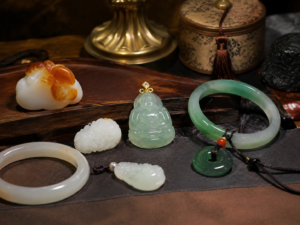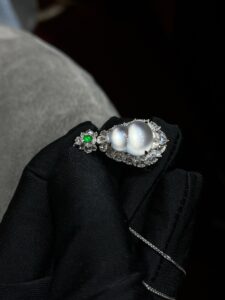


How to tell real jadeite is really two questions: is the stone jadeite at all, and has it been treated? In the trade, “real” means Type A — natural jadeite, untreated and undyed. Type B has been acid-bleached and injected with polymer; Type C has been dyed; B+C both. Some home observations help, and we will give them honestly — but the truthful answer is that no home test is definitive, and a certificate from an independent laboratory settles what eyes cannot.
What the letters actually mean
Type A is jadeite as the ground made it — cut, carved and polished, nothing added, nothing removed but stone. Its colour is stable for generations. Type B starts as low-grade material with dirty veins; acid strips the discolouration, leaving the structure spongy, and polymer resin fills the voids. It looks glassy and clean on day one and dulls, yellows or crazes over the years. Type C is dyed — colour introduced from outside, which concentrates in the cracks between grains and fades with light and wear. None of this is illegal to sell; it is only illegal to sell it as natural. The whole game is disclosure.
What you can honestly observe at home
Colour that sits in cracks. Under a strong loupe, dyed colour pools in a web of fine lines between grains — natural colour belongs to the grains themselves and drifts in roots and clouds.
A surface like orange peel, or like etched glass. Polished natural jadeite often shows a faintly dimpled “orange peel” surface under magnification. Acid-treated stone instead shows a network of fine etch lines — the scars of the bleaching bath.
Lustre and ring. Type A carries a sharp, glassy-to-oily lustre; resin-filled stone reads slightly plastic, its light softer and vaguer. Tapped gently against another jade piece, natural stone rings clear and high; treated stone sounds dull. Suggestive, not conclusive.
Weight and cold. Jadeite is dense (about 3.3) and conducts heat away from the skin — it feels heavier than it looks and stays cool a moment longer than glass. Practised hands trust this; new hands should not rely on it.
The price. The least technical test and the most reliable: fine, glowing, evenly-coloured jadeite at a too-good price is answering the question for you.
The honest limits
Every observation above can be faked, ambiguous, or simply beyond an untrained eye — good B-jade fools people who have handled stone for years. This is not a field where confidence should come from a blog post, ours included. It should come from a laboratory: spectroscopy sees polymer and dye directly, no matter how convincing the surface.
What a certificate settles
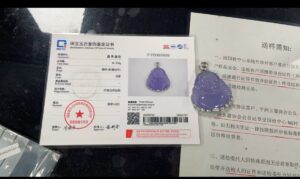
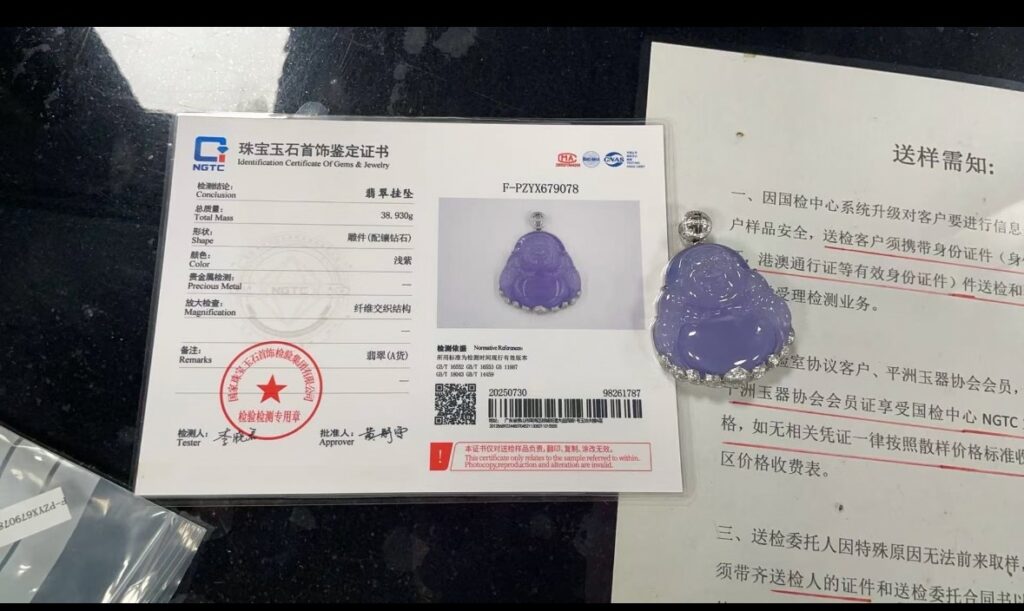
An independent lab report — from NGTC, the national gemstone testing centre we use, or an equivalent body — states the species (jadeite) and whether treatment is detected. Reading one takes ten seconds: look for natural jadeite with no polymer or dye remarks, check that the photo, weight and dimensions match the piece in your hand, and verify the report number on the lab’s website if offered. Every piece we sell, from the Atelier collection to one-of-a-kind Heritage pieces, ships with its NGTC paperwork — not because our word is doubted, but because in jade, paperwork is how honest sellers compete with dishonest ones.
Frequently asked questions
Does the scratch test prove jade is real?
No — skip it. Jadeite is hard (6.5–7), so it resists a steel blade; but so do glass and quartz, and a failed test damages the piece. It neither identifies jadeite nor rules out treatment.
Will real jadeite change colour over time?
Type A colour is stable — what changes with years of wear is the polish deepening slightly, which owners read fondly as the stone “opening.” Fading, yellowing or crazing is the signature of treated stone, not a property of jade.
Is B-jade worthless?
As jewellery bought knowingly and cheaply, it is decoration with a short life. As an investment or an heirloom, yes — effectively worthless, and it cannot be undone. The premium for Type A is the price of permanence.